
Best Commercial Vehicles for Contractors, Builders, and Landscapers in Birmingham, Alabama
Posted at Mon, Aug 25, 2025 1:00 PM
When you need a commercial vehicle for your business, some priorities usually come to mind, such as reliability, durability, low running costs, and easy maintenance. If you're a contractor, builder, landscaper, or any other professional who relies on a vehicle to transport tools and materials to your customers, it's essential to know yours is dependable.
This article explains how different commercial vehicles can help you with your job and outlines why many Alabama professionals choose Stivers Ford of Birmingham as their preferred dealership for purchasing commercial vehicles.
Differences Between Commercial Work Vehicles and How They Can Help You on the Job
Before explaining the different types of commercial vehicles and how they can assist Alabama professionals, it's important to mention what a commercial vehicle is. A broad definition includes any vehicle that a company registers for business purposes as a "commercial" one, from a huge semitrailer truck to a scooter. The legal commercial vehicle definition states that it's a vehicle that uses public roads to transport people or property.
Below are some common types of commercial vehicles.
Work Trucks
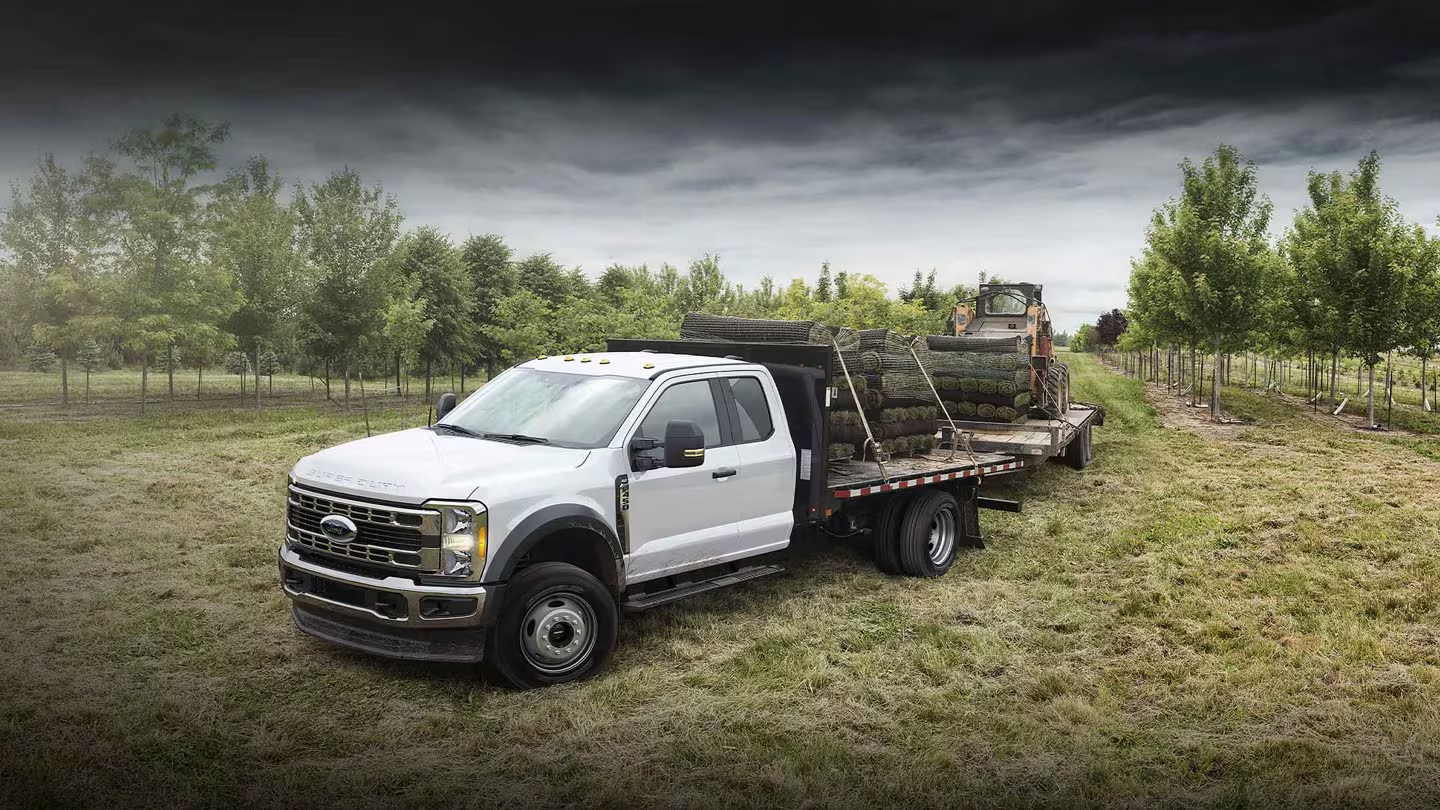
Trucks are the most familiar and popular type of commercial vehicle. They come in a variety of sizes, but not all of them are considered commercial. Trucks have eight weight classes, with Classes 1 to 3 being considered light-duty trucks, Classes 4 to 6 being deemed medium-duty trucks, and Classes 7 and 8 being called heavy-duty trucks. However, only Class 3 to 8 trucks are classified as commercial vehicles. An example of a Class 3 truck, which is the smallest to count as a commercial vehicle, is the Ford Super Duty F-350.
Commercial Flatbed Trucks
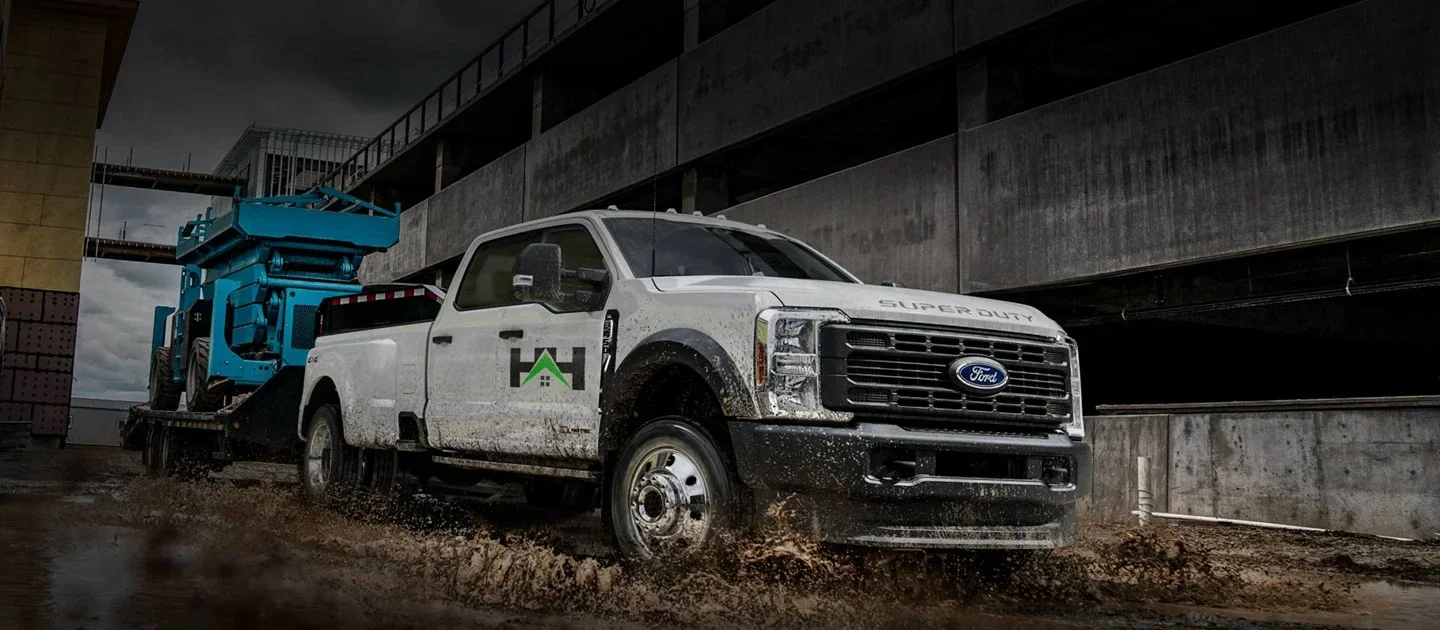
If you need to haul items that wouldn't fit in any conventional truck or van, a flatbed truck is your best option. Their flat open-top trailer has no roof or side railings, providing ample space for huge loads. It's also short enough to maintain a low center of gravity and enhance stability while also offering access to height-restricted areas such as underpasses. Being close to the ground also makes it easier to load and unload the cargo.
Work Vans
As opposed to trucks, vans can also be designed to carry either passengers or cargo. Those that carry cargo are divided into three different classes based on their size, but only Class 3 can be considered a commercial vehicle. Ford Transit 150, 250, and 350 models are great examples of Class 1, 2, and 3 vans.
One of the main reasons why vans are great cargo carriers is their excellent versatility. They're indispensable for many delivery businesses and particularly useful in urban areas, with vans providing easy maneuverability in city traffic despite their cargo capacity. They're also helpful to contractors who need to get tools and equipment to job sites. Their interiors can be configured to carry various types of cargo safely and economically.
However, a van's versatility isn't limited to just being suitable for carrying objects and materials. They're also excellent at transporting people, with Ford Transit passenger vans accommodating up to 15 people. Passenger vans are essentially the same models as cargo vans, but their interior includes passenger seats instead of cargo space. For instance, Ford Transit passenger vans can accommodate up to 15 people. This can make them beneficial in areas and situations where a bus would be too large and difficult to maneuver. The two main types of commercial passenger vans are:
- Those designed to carry between nine and 15 passengers, including the driver
- Those designed to carry 16 passengers or more
Buses
Unlike trucks and vans, most buses are classified as commercial vehicles. These include minibuses, which can typically hold more passengers than a commercial passenger van. The commercial vehicle category also contains motorcoaches when they're used for commercial purposes, such as private tours, chartering, or any other commercial activity that involves transporting passengers.
Specialty Work Vehicles
Most specialty vehicles are based on the above-mentioned trucks, vans, and buses, but are heavily modified for specific purposes. Common examples include fire trucks, garbage trucks, tow trucks, and septic trucks. Some cars can also obtain the "commercial vehicle" classification if they're solely used for commercial purposes, such as taxis, rental vehicles, and delivery vehicles.
Fleet Vehicle Financing and Tax Incentives for Alabama Businesses
If you operate or manage an Alabama-based business and would like to add new commercial vehicles to your fleet, you can benefit from several financing offers and tax incentives. Here at Stivers Ford of Birmingham, we do our best to help local businesses in Birmingham, Alabama, get the vehicles they need to operate successfully. From small family businesses to large corporations, our versatile financing options can assist any type of organization.
After filling out our online application, one of our financing experts will contact you to discuss specific details and options. We work with multiple local lenders, so we're able to secure excellent rates for our customers. Financing your commercial vehicle purchase through us is a great way to efficiently get what you need and on advantageous terms.
Schedule a Work Truck Demo or Upfit Consultation at Stivers Ford of Birmingham
If your business needs extra transportation, consider buying a new commercial vehicle from Stivers Ford of Birmingham. Our staff will help you find the vehicle that can handle whatever job you need it for. After your purchase, our technicians will be here to assist you with maintenance and repair duties, so you can get your commercial vehicle ready and back on the road as soon as possible. Contact us today to learn more about what we can do for your business.
Images by OEM